
Breed registry
Digital registry for the Kazakh Tazy
TAZY.DOG brings verified dog profiles, breeders, QR passports, the breed map, heritage, and FCI data into one working system.
8
verification levels
17+3
regions and external nodes
QR
public QR passports
2034
full recognition target
Quick paths
Choose the section that matches your task.
Owners, breeders, buyers, experts, partners, and researchers each have a direct entry point.Owner
Assemble an application for a dog profile
Fill in dog details, contacts, and base documents before publishing the profile. Open the application plannerBreeder
Submit a breeder application
Provide kennel details, region, and document readiness for catalogue and litter work. Open breeder formBuyer
Verify the passport, origin, and safe contact path
The check works without exposing owner data and without passing files around in messengers. Verify QR passportExpert
Submit an expert application
Provide your role, specialization, and working contact for material review. Open expert formPartner / FCI
Submit a partner or FCI request
Provide the organization, contact, deadline, and the format of the material you need. Open partner formResearch / media
Study the breed map, heritage, and public data geography
The QazGEO map, cultural layer, and working clusters give a fast sense of the project's scale. Open the mapTrust and methodology
Why this data can be trusted.
Only verified information is shown in the dog's profile. Private contacts and restricted documents are not published.- Every public claim should lead back to a source, a status, and a decision log.
- Private owner data never leaves the public profile, QR passport, or map.
- Done, in progress, risk, and waiting should read the same in the registry, review, and FCI track.
- Partner export packages are assembled from the same event model instead of being rebuilt by hand before a deadline.
Working platform
TAZY.DOG brings the registry, breeding operations, map, and FCI progress into one system.
The homepage opens straight into the core services: dog profiles, breeder network, operations map, breeding block, and data room.Public registry
Dog profiles, QR passports, and public verification
A working surface for owners, breeders, buyers, partners, and event checks. Open registryParticipant network
Breeders, litter declarations, and trust tiers
Clear roles, a shared code, and controlled access to the professional contour. Open catalogueHealth protocol
A health passport without vague promises
Required and recommended checks are shown by status, source, and evidence link. Open protocolIdentity check
QR, passport, and microchip relay
The check does not expose the owner: it shows the record and routes to safe contact. Verify passportOperational map
Regional clusters, events, and cultural points
The map shows where the breed lives, where checks happen, and where heritage accumulates. Open mapBreeding
Pairing, COI, line pressure, and pre-mating decisions
The breeding block works as a population-governance tool rather than a side spreadsheet. Open breedingPassport and heritage
Public passport, line dossier, and international context
One object links the dog card, the cultural layer, export, and diplomacy cases. Open passport layerFCI and data room
FCI progress, data room, and review
The workspace for federations, experts, and partners who need status, exports, and evidence. Open institutional layerWorking core
The public site and expert workspace run on one data model.
Profiles, evidence, geography, breeding, and reporting share one verification logic and one event log.- public dog profile and QR passport
- evidence and access-review queue
- operational map across regions and scenarios
- breeding calculator and Health Passport
Global benchmark
Our strength exists only if the platform clearly shows how TAZY.DOG differs from ZooEasy, PDO, and AKC Marketplace.
Most solutions cover registry and pedigrees, but do not combine FCI, health, culture, tourism, diplomacy, and preservation into one evidence system.
Platform
Pedigrees
Health/DNA
Community
Culture/tourism
Diplomacy
ZooEasy / PDO
✓✓———
AKC Marketplace
✓—✓——
TAZY.DOG
✓✓✓✓✓
Participant journey
The participant journey reads as a working process: from first application to public profile and export package.
Owners, breeders, experts, and partners follow one clear cycle: application, evidence, review, publication, breeding decision, and export.Owner
Application and base profile
Photos, microchip, region, origin, and initial documents are assembled into a profile under review.Evidence
Health, DNA, and field work
Each layer receives a status, source, date, attachment, and responsible reviewer.Review
Review with a clear decision log
The review queue separates private data from public claims and preserves a decision audit.Publication
QR passport and trust
The public profile shows only verified claims while sensitive documents stay in the protected contour.Export
FCI and partners
Quarterly snapshots, export packages, and the evidence history toward 2034 are assembled from the live log.Evidence registry
The public dog profile is the core object of the platform.
One card combines origin, health, DNA, field trials, and export readiness in a single verifiable object.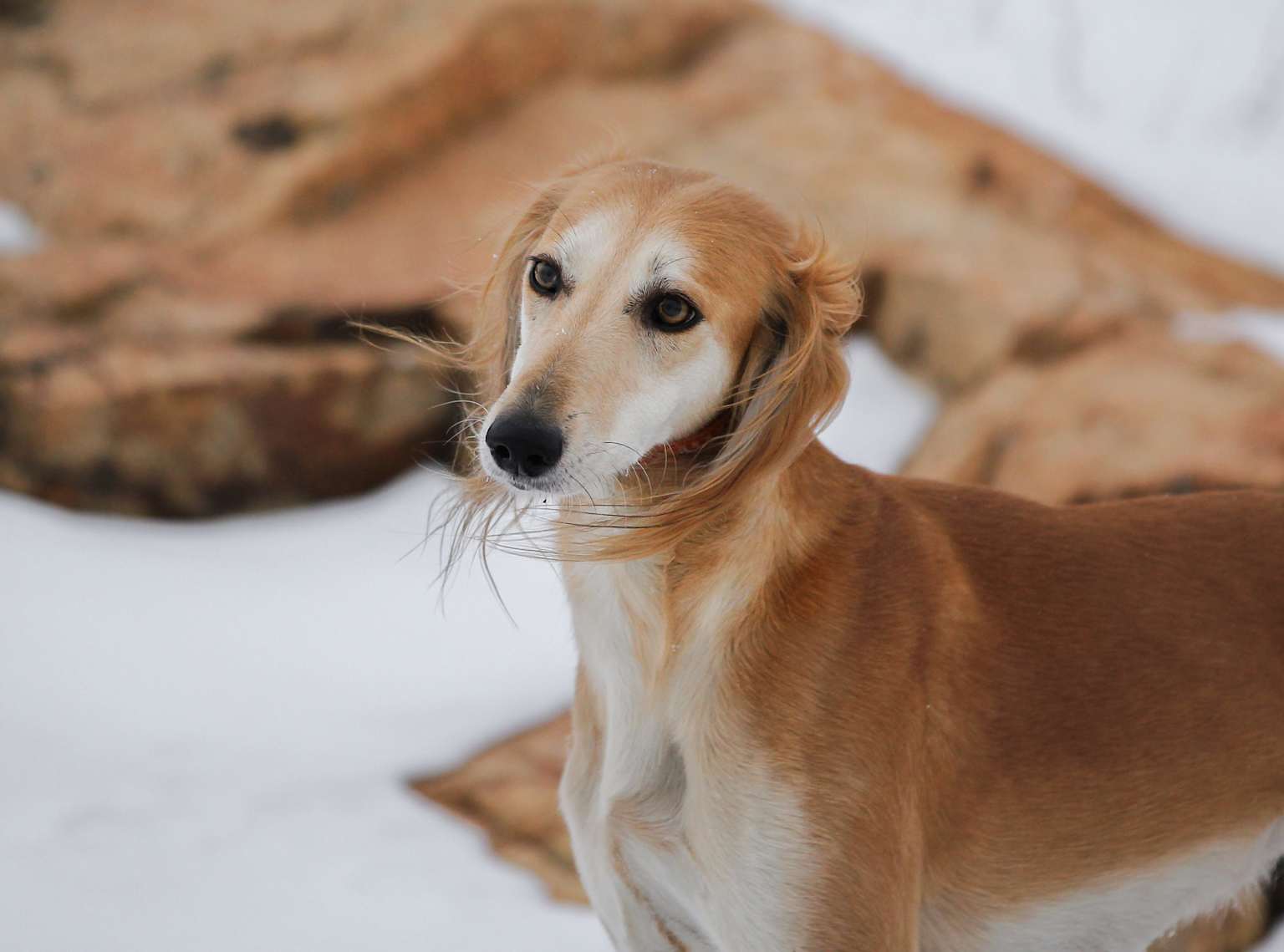
86%
No public profiles match these filters yet.
A QR passport as the public entry point
An event check, a diplomatic gift, a puppy sale, or an international review should start from one verifiable URL, not a chain of files.
Every public claim is tied to evidence
Profile completeness and verification level are visible in public, while private owner data stays in the protected contour.
The registry is built for export from day one
The profile and event log are designed to generate FCI exports, not to be assembled manually before deadlines.
Health Passport
Breeding status cannot be issued without health, DNA, and field data.
The platform should immediately show an international bar: dysplasia, ophthalmology, DNA, temperament and trial outcomes in one unified health passport.- DysplasiaOFA/PennHIP or local equivalent
- DNAidentification, alleles, genetic risks
- Ophthalmologymandatory inspection before breeding entry
- Field trialsspeed, endurance, intelligence and GPS route
- Temperamenttemperament, resilience and work with a person
Breeder network
The breeder network shows status, obligations, and quality of work.
Participation tiers, the network code, litter declarations, and the health passport combine into one transparent professional contour.Owner
Base tier
The owner verifies the dog profile, photos, and basic documents and can participate in events and the public showcase.Breeder
Professional tier
The breeder passes document checks, accepts the code, and gains access to litter declarations, pairing review, and the catalogue.Expert
Expert tier
Judges, veterinarians, and curators validate evidence, health records, and official reports for FCI and partners.Operational map
The map shows regional nodes, field scenarios, and the cultural layer.
Profiles, kennels, events, routes, and heritage points share one geographic base.Genetic centre
Breeding works as a population-governance tool.
COI, popular sire pressure, line diversity, and litter simulation are available before the mating decision.Recommended with monitoring
The pair is acceptable for the 2034 FCI evidence cycle. Add ophthalmology and field-trial video before export-ready status.
Technical contour
Technically, TAZY.DOG should be the breed operating system: data enters the core once and then flows into public, expert, and institutional layers.
The core separates public profiles, protected evidence, review, export packages, and mobile workflows so the showcase never becomes a private-document store.Evidence Core
One evidence core
Versioned profile records, review statuses, data owners, sources, and the decision log.Public API
Public profiles
QR passports, dog cards, public statuses, regional map, and heritage layer.Review OS
Review and roles
Expert queues, decisions, rejection reasons, change requests, and immutable audit.Breeding Engine
Breeding analytics
COI, popular sire risk, line diversity, and responsible litter scenarios.Data Room
Exports and reports
FCI snapshots, state reports, press packages, international references, and the evidence manifest.Heritage and diplomacy
The digital passport is where registry, cultural heritage, and the international track meet, not just a QR graphic.
A QR code, cryptographic hash, immutable event log, and public profile link turn a symbolic document into verifiable evidence.T
Tazy Digital Passport
TZY-KZ-000182
- DNA parentageApproved · 2026-05-17
- Health packageOphthalmology pending
- Field trialVideo evidence attached
Geography, heritage and diplomacy
Tazy should be visible to the world as a breed, cultural code, and verifiable origin system.
The site should explain not only dogs, but also routes: from kennel and field trials to diplomatic gifts, tourism, heritage archives, and UNESCO submission.Tazy Ambassadors Map
A public map of officially gifted and exported Tazy with country, name, history, current photos, and a link to a digital passport.
Living heritage
Video interviews, oral histories, geotags, museums, rock art, and materials for UNESCO Intangible Cultural Heritage.
Tazy tourism
Meet the Tazy, field trials, hosted kennels, World Nomad Games and heritage passports for tourists.
Breed Standard
A dedicated EN page for the FCI standard with illustrations, clear conformation vocabulary, and links to verified profiles.
How to Import a Tazy
English layer for FCI clubs, overseas owners, and embassies: country requirements, documents, veterinary rules, and contacts.
Institutional layer
Public progress, the data room, and the passport layer run as one contour.
From the outside you see cycle status; inside you get protected documents, exports, review workflows, and the international passport layer.Public layer
Public FCI progress
A route for partners and outside observers: cycle status, evidence depth, and visible gaps. Open public trackProtected workspace
FCI Data Room
Pedigree, health, DNA, and population slices are assembled in a closed contour without deadline-time manual work. Open data roomReview OS
Reviewer workspace
Private documents, review states, change requests, and the decision log stay separate from the public showcase. Open review contourPassport layer
Heritage, line dossiers, and diplomacy cases
The digital passport is connected to the dog card, the line, the archive, and the international reading layer. Open passport layerData for science and decisions
The Data Room should be a source of reports, partnerships, and breed-preservation policy, not a closed office.
Anonymized slices on COI, health, regions, DNA diversity, and field trials become the language for FCI, agriculture ministry, researchers, and international clubs.Population dashboard
COI by cohorts, regional diversity, health passport coverage, and litter dynamics.
Laboratories and DNA
A short route is integration with Embark/Wisdom/VGL; a long route is a fully local data stack.
Gene bank
Long-term preservation contours with branches, international banks, and rare lines.
API and export
CSV, PDF, FCI-compatible XML, partner API, and evidence manifests for verified packages.
Launch KPIs
By 3 September, the platform shows a measurable launch plan.
Registration, launch, Tazy Day, and the path to 2034 read as an operating program with clear metrics.Unified interface
One interface keeps the public site, review workspace, and field flows inside a single system.
Shared surfaces, statuses, density, and bilingual components keep modules from fragmenting into separate sites.Surfaces
One visual logic
Dark/light themes, cards, borders, and work states stay consistent across modules.States
Statuses read the same everywhere
Done, in progress, risk, and waiting for external confirmation look the same in the registry, review workspace, and data room.Density
Operational density
Public sections stay calm and readable while work surfaces remain compact for queues, tables, and checks.Locale
Russian and English without navigation drift
The public launch is open in Russian and English, and the language layer does not break cards, buttons, or mobile navigation.Launch starts with working infrastructure.
The period from 17 May to 3 September is for registration, scenario hardening, breeder alignment, and collecting live data for public launch.